University tests identify the most efficient steam trap
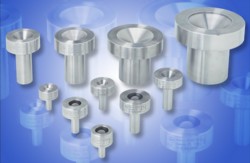
The GEM venturi steam trap is the most efficient available, according to tests at Queen’s University, Belfast.
The GEM venturi steam trap, made by Gardner Energy Management, is the most efficient steam trap available — according to a performance analysis carried by Queen’s University, Belfast. The testing was undertaken under the supervision of Dr Gavin Walker, senior lecturer in chemical engineering, and carried out under BS EN 27841:1991. A variety of steam traps were put through their paces — including buckets, floats, thermostatic and thermodynamic valve arrangements. Only new traps were used, even though it had previously been noted that the performance of mechanical and thermostatic traps diminished over time as components wear and fail. Performance was analysed under maximum steam pressure over a full range of condensate flows. Tests were performed on each trap at a constant pressure of 3.7 bar with flows up to 20 kg/h. ‘Bucket tests’ were conducted according to the European standard to measure the live steam loss through traps at five condensate load conditions. The results showed that the GEM venturi steam trap is significantly more efficient over varying loads than all other types of trap. The least efficient traps have losses averaging over 1.5 kg/h. The tests also showed the GEM trap to be more efficient than mechanical traps, contrary to previous perceptions that orifice venturi traps are inefficient at low load where there is little condensate to hold back the steam. Tim Gardner, managing director of Gardner Energy Management, says, ‘This research, carried out under the most stringent conditions, has underlined the superiority of the GEM trap. In addition, as GEM traps have no moving parts to fail or wear out, there is no need for continual trap testing, repair and replacement.’
Related links: