JJB leisure centres put Hager Tebis system through its paces
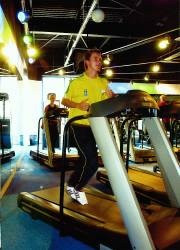
Fast track installation of the lighting control system for three JJB leisure centres has been achieved using Hager’s bus-based system instead of conventional wiring.
The problems of providing both central switching and some local control for lighting circuits supplied from different distribution boards has been solved for JJB leisure centres by Hannan Associates using Hager’s Tebis bus-based system. Electrical contractor EEW installed a single 12 V bus line run throughout each leisure centre. Outputs (all the lighting circuits in this case) and inputs (multi-gang grid switches and some local wall switches) tap onto the bus via connectors. All input and output devices are assigned an address on the system, which is programmed so that lighting circuits respond to particular switches. Individual circuits can respond to more than one switch, so many variations are possible. A conventional hard-wired solution would have involved multi-core cabling throughout the building, all being terminated into one central grid switching unit behind the reception. Apart from the logistics of terminating several cables into the correct switch, there is no flexibility to change specifications during building. Paul Cuthbert of EEW says, ‘We probably saved about 20% labour time using Tebis compared to conventional hard wiring. There were also some cost savings by not using multi-core cabling, but more importantly the system gives us the flexibility to easily change the specification without having to run new cabling throughout the building.’ More functionality can easily be added. For example, it is possible to define a master switch which turns off most of the lighting apart from that needed for security. Three centres have already used this solution — Widnes, Kidderminster and Burton on Trent.
Related links: