


Putting the business case back into Net Zero
The mood around Net Zero has shifted in ways that would have seemed unlikely just a few years ago, says BESA’s Director of Technical, Kevin Morrissey.

Integrating renewable energy with high-performance battery technology will be a game-changer for buildings — believes Tim Mitchell of Klima-Therm.

The evolution of the UK hot water & heating market
Rinnai’s Chris Goggin examines the current UK heating and hot water markets with a detailed statistical analysis of each notable sector to reveal the preferred methods of supplying both residential and commercial properties with warmth and DHW. This review will also look at the impact of legislation upon customer options.

Heatwaves – making the argument for home cooling grants
The government had to U-turn on Winter Fuel Payments but the argument for Summer Cool Payments is even stronger, writes BESA Technical Director Kevin Morrissey.

How our services ‘superpower’ can beat the tariffs
Donald Trump’s tariff-driven approach to international trade has echoes of the economic chaos that reigned during the Depression era of the 1930s, writes David Frise – CEO of BESA.

Rinnai’s Tony Gittings analyses the advent of a shortage of skilled labour in the HVAC industry and specifically in heat pump installation, as well as the wider energy industry. The effect of a rising skills shortage on large infrastructure projects and national NetZero objectives may take a heavy toll.

Protecting project costs amongst price volatility
Controlling costs in construction projects is always a challenge, with volatility in the price of materials often a key factor. Fluctuations in metal prices, for example, can have far-reaching impacts on project budgets, timelines and profitability. In this article, Nathaniel Watts, Finance Director at Selkent, explores some effective ways to mitigate these risks and control project costs.

Dr Anastasia Mylona, Technical Director at CIBSE, celebrates the organisation’s achievements in 2024 and looks ahead to 2025 and beyond.

Increased urgency for retrofit plan
BESA President Adrian Hurley looks ahead to the priorities for 2025 and argues that the need for a national programme of building retrofits with full government backing is becoming increasingly urgent.
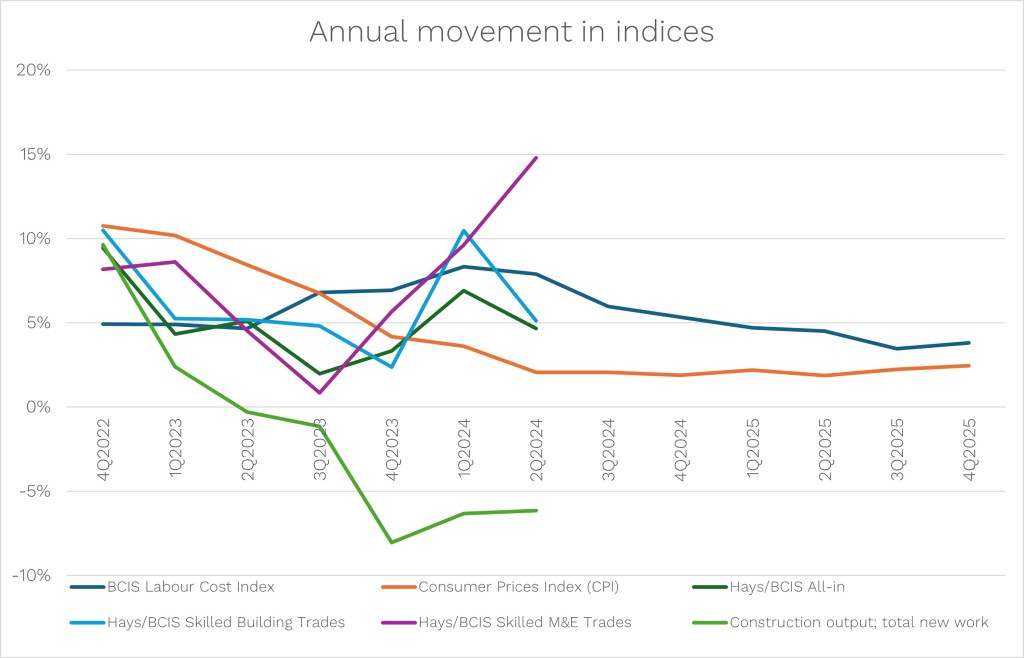
Paul Burrows, Solutions Architect at the Building Cost Information Service (BCIS), takes a look back on labour costs and expected movement in 2025.

Tackling the M&E knowledge gap in the framework world
With M&E works normally being undertaken by a subcontractor, these professionals traditionally hold a position within wider supplier chains. However, particularly when awarded work via a framework, M&E organisations can also hold a project lead role. A knowledge gap in this market is now emerging when it comes to these businesses maximising frameworks and resources. Here, Rebecca Oglesby, Framework Manager at Pagabo, reflects on this pattern being observed and how it is leading to missed opportunities.

The new Labour administration quickly committed itself to ‘get Britain building again’, but will it also recognise the contribution the building services industry can make to addressing the huge social issues of health and wellbeing? David Frise, CEO of BESA, looks at the main issues that need to be addressed.

MBS recently sat down with CIBSE Technical Director Dr Anastasia Mylona to discuss her role in shaping the institution’s technical agenda and tackling key industry challenges.

‘Game changing’ developments for healthier buildings
Greater awareness of the health problems linked to poorly maintained ventilation systems has prompted several recent ‘game changing’ developments, according to Graeme Fox, Technical Director of BESA.

The CIBSE Building Performance Awards continue to grow from strength-to-strength. Anastasia Mylona, Technical Director at CIBSE, explains what makes these awards so unique to the sector.

Many contractors are still ignoring safety regulations despite repeated warnings that measures introduced by the Building Safety Act are already in place and affect every project, according to the Building Engineering Services Association (BESA).

Five fundamentals for the next 12 months
As the UK energy landscape continues to undergo major changes, Team Energy’s Head of Consultancy, Timothy Holman, explores the crucial events to keep an eye on over the next 12 months.

Closing the ventilation skills gap
Stuart Smith, Commercial Director at indoor climate solutions provider, Zehnder Group UK, discusses the urgent need for specialised training in M&E contracting.

'Building Safety Act will not create two models'
A newly-formed BESA advisory group says new legislation will transform all aspects of project delivery and business management.

2023 was tough but the industry is resilient
2023 was a big year for the building services sector, with an unprecedented surge in legislation and commercial business challenges, but BESA President Claire Curran believes there are reasons to be optimistic about 2024.

CIBSE embodied carbon methodology fast becoming the global standard for building services
Anastasia Mylona, Technical Director at the Chartered Institution of Building Services Engineers (CIBSE), explains why embodied carbon is increasingly important in building services design and outlines CIBSE’s calculation methodology which is rapidly being adopted internationally.

Building Safety Act: What you need to know
From 1st October 2023 a number of new regulations came into force under the Building Safety Act 2022, and they don’t only affect high-risk buildings. Alex Minett, Head of Global New Markets at CHAS highlights some of the key changes.

Rishi Sunak's Net Zero announcement - the industry responds
On the 20th of September, 2023, Prime Minister Rishi Sunak announced a slowdown to the pace of Net Zero initiatives in hte UK.

BESA President calls for crisis engineering
The UK should look to its engineering community for solutions to many of the serious social and economic challenges it is facing, according to the President of the Building Engineering Services Association (BESA).

BESA calls for calm in face of F-gas furore
The Building Engineering Services Association (BESA) has urged the UK government to keep “a sense of perspective” in the face of a growing row over the European Commission’s decision to speed up the phase down of global warming gases used in refrigeration and air conditioning equipment.

Cautious welcome for government energy efficiency plan
The government’s strategy for spending up to £2.5bn on improving the energy efficiency of homes and public sector buildings has been given a cautious welcome by the Building Engineering Services Association (BESA).

Whitty report can be turning point for ventilation
The Building Engineering Services Association (BESA) says support from the UK’s Chief Medical Officer for more investment in indoor air quality (IAQ) could unleash a wave of ventilation improvements in buildings.

UK missing out on ‘easy energy savings’, says BESA
Despite growing concern about energy costs, thousands of commercial and residential building owners are missing out on straightforward, low-cost ways to improve energy efficiency, according to the Building Engineering Services Association (BESA).

The Autumn Statement - the industry responds
The Government released its Autumn Statement last week. With an economic slowdown on the cards and high inflation, what does this mean for the road to net zero and the Building-Services Industry? We’ve rounded up how figures from across the industry reacted and what they had to say.
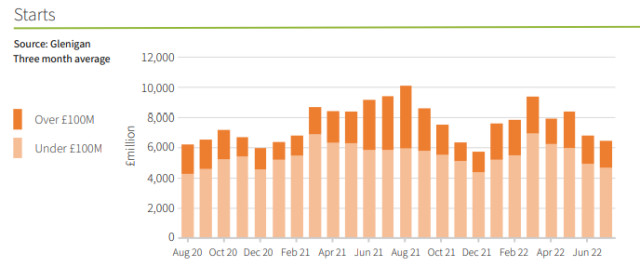
Project starts fall as construction costs rise sharply
The central finding of the latest Glenigan Review is that project-starts returned to decline as sharp rises in construction costs and a weak economic outlook continue to suppress industry activity.

Ian Davis, Technical Manager at Soler and Palau UK, casts his expert eye over incoming changes to Building Regulations Part F and L and unpicks three important areas for HVAC professionals before they come into force in Summer 2022.

Chancellor Rishi Sunak might be getting a real pounding in the press over his family’s tax affairs, but his judgement could not be faulted over some of the changes he announced in his Spring Statement, according to the Building Engineering Services Association (BESA).

It’s been two years since the pandemic changed life for everyone, and we’ve seen some big developments to the role of Facilities Managers (FM). In this article, Derek Parker of Artic Building Services reviews the impact of the pandemic on facilities management, including new responsibilities within the role and the increased focus on health and safety.

Despite the multiple challenges of Covid-19, importing difficulties and material shortages, the engineering and construction industry is anticipated to further advance this year. However, the recovery will not be evenly spread, with some regions and sectors performing better than others, mirroring a fluctuating UK economic and social landscape.
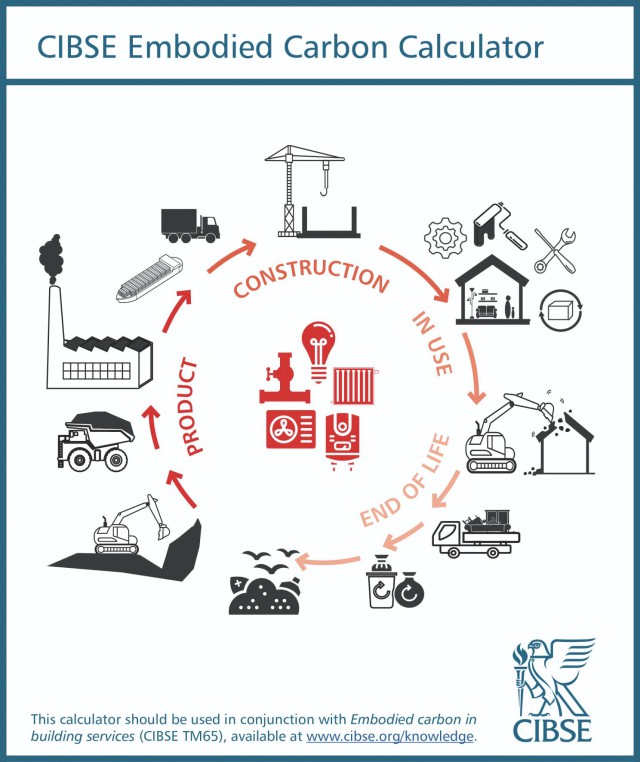
New embodied carbon calculator for building services
The Chartered Institution of Building Services Engineers (CIBSE) has published a digital Embodied Carbon Calculator tool to enable engineers to estimate the embodied carbon associated with mechanical, electrical and public health systems in buildings.

Huge retrofit programme needed to get buildings working
Only an ambitious renovation plan for commercial buildings will get us on the path to net zero and improve the health and well-being conditions for occupants, according to BESA’s head of technical Graeme Fox.

Controls around construction plant and machinery are getting stricter but implementing the right plant management processes can help construction sites be prepared, Ian McKinnon, MD of CHAS

Ten issues that will affect construction supply chains in 2022
CHAS, the supply chain risk management expert, highlights ten issues that will affect construction supply chains in 2022.

Building design key to hitting university sustainability targets
More sustainable heating and cooling solutions in educational buildings following the publication of analysis suggesting most UK universities are not on track to hit emissions targets.

Smart Building, Equipment & IoT Trends 2022
With 2021 still being dominated by the effects of Covid-19, many of the trends that emerged this year, such as changing the way we work and the switch to remote management, are still evolving and here to stay. However, there have been key events and drivers, such as the COP26 conference, that will significantly influence the technology trends over the coming year.

Whitty urges businesses to invest in ventilation
Investing in building ventilation will play a key role in helping the country recover from the Covid-19 pandemic and prepare for future health emergencies, according to the government's chief medical adviser Professor Chris Whitty.

As COP26 ends, we've pulled together comment and thoughts about the event and issues raised from across the industry.

Only a fifth of large consultancy clients ask for Net Zero designs
The Association for Consultancy and Engineering (ACE) has today shared new figures revealing that while consultancies are making good progress towards unlocking a Net Zero future, client demand remains patchy, with only around a fifth (19%) of large consultancy and around a quarter (24%) of SME clients, asking for net zero compatible designs.

Net Zero Strategy and Heat & Buildings - the Industry responds
The Government released its long-delayed Net Zero Review and Heating and Hot Water Strategy last week. As the UK’s building stock is responsible for such a high proportion of the country’s Carbon Emissions, the Building Services sector in both domestic and commercial arenas will both be hugely impacted by the strategies and front and centre in the response.

Construction and the face covering conundrum
To mask or not to mask?
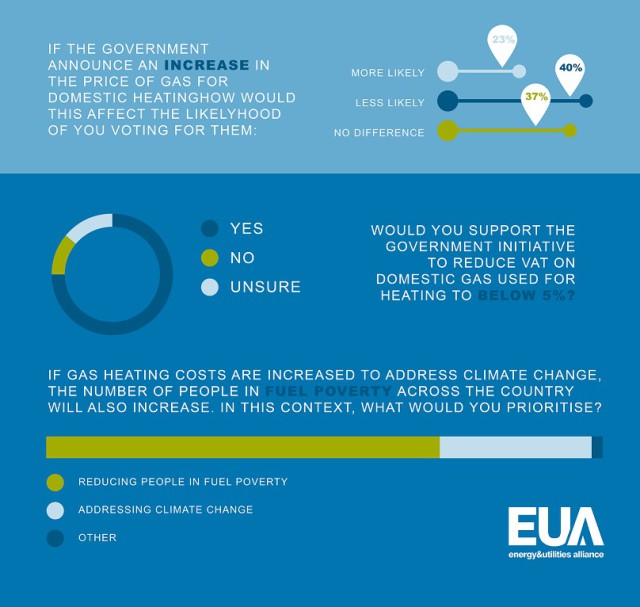
Government warned of public backlash if gas prices are increased to help meet climate targets
The government has been warned that it faces a major public backlash if it attempts to use an increase in domestic gas prices as a way of forcing homeowners to buy expensive low carbon heating appliances in own homes.

Response to UK Government Plan
Ian Rippin, CEO of MCS – the national standards organisation for renewables – responds to the government’s 10-point plan for a “Green Industrial Revolution”, which aims to make the UK carbon neutral by 2050

CIBSE has released guidance on the use of environmental product declarations (EPDs) for building services equipment. This guidance also provides a method for estimating the embodied carbon of building services equipment where EPDs are not yet available.

Business Transition for Brexit
Help is on hand for businesses in key sectors to prepare for the end of the Brexit transition period. The UK is leaving the EU single market and customs union on Dec 31 and businesses need to get ready for the changes it will bring.

Over-engineered buildings put a dent in efficiency
Alex Hill, Managing Director, Whitecode Design Associates says “building performance and efficiency are increasingly under the spotlight as a result of the move to carbon neutrality.”




Lighting the way
Halesowen College has set a sustainability example for higher education institutions by installing smart lighting as part of its latest environmental initiative, making up to 85% energy savings compared to the previous system.
BESA updates HIU Test Standard
The Building Engineering Services Association (BESA) has announced an important update to its UK Heat Interface Unit (HIU) Test Standard, further strengthening performance benchmarks and supporting the sector’s readiness for incoming heat network regulation.
