


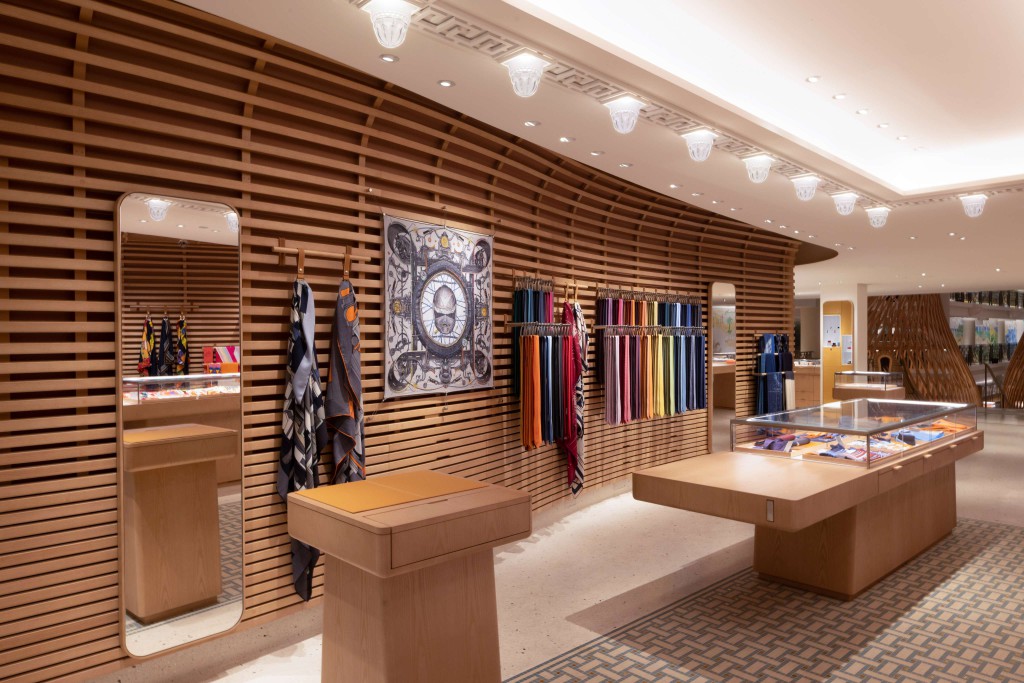
Marco Tolaini, Sales Director of Lucent Lighting, discusses how lighting enhances the retail experience while delivering on energy efficiency.

Office lighting: Should we even be calling it ‘the office’?
Workplace interiors started changing BC (before Covid). Fast-forward to 2024, and they have prompted a paradigm shift. Sophie Parry CEng MIET FSLL, Head of the UK Academy at TRILUX, discusses this shift and what constitutes good lighting for today’s working environments.

Endurance test in the classroom
A primary school in Leipzig, Germany trial TRILUX Opendo LED with CO2 sensor

TRILUX Lighting win a Gold and Green Build Back Better Award
TRILUX Lighting is proud to announce its recent success in the Build Back Better Awards Autumn edition.
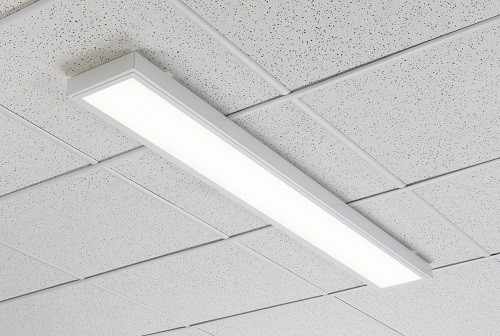
Knightsbridge simplifies switching to LED fittings
Knightsbridge has introduced the SUR5LED dual-mount LED luminaire that can be surface-mounted or suspended. It’s an easily installed, retrofittable alternative to twin 5ft fluorescent fittings with a commercial grade output of 4790lm.
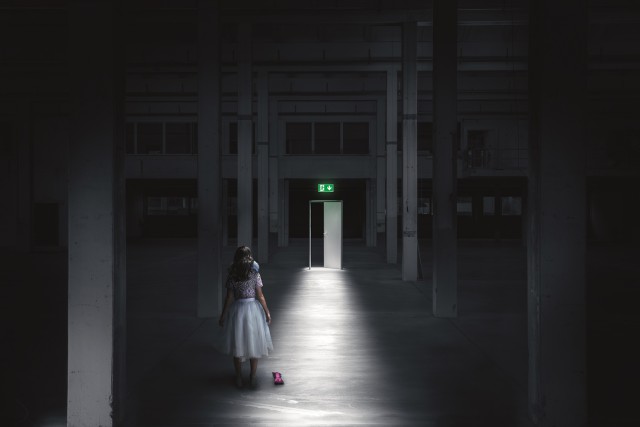
Advertorial - Power when it's needed the most
When it comes to protecting human lives, fail-safe performance and quality of products are essential. Emergency lighting must work – at all times, and it must be reliable.
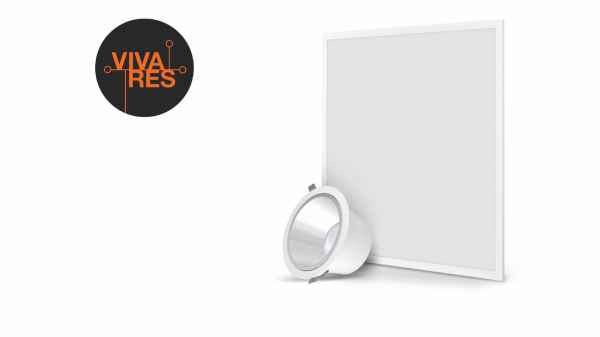
LEDVANCE launches new VIVARES Light Management System (LMS
The new future-proof IoT VIVARES offers superb simplicity with compatibility to two technologies: a wireless option via VIVARES Zigbee and a wired version using DALI-2 technology. It adapts lighting to the most diverse requirements, integrating daylight and motion sensors further increases the energy savings that can be achieved, and cloud-based monitoring ensures greater reliability and security.

Why is data such an important part of smart lighting?
Andre Jutel of amBX asks ‘why is data such an important part of smart lighting?’. It’s a broad question, but one that people within the wider smart city and IoT industries might wonder about.
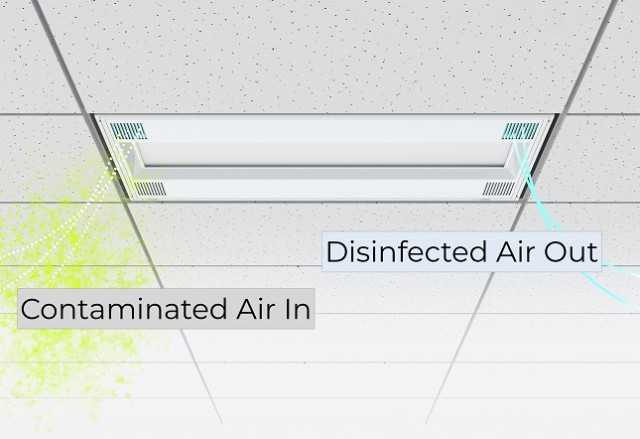
Delivering Human-Centric Lighting to the Masses
Christopher Johnston, Director of Total Sustainability, Energy Focus, Inc. shares the impact lighting design has on health & wellbeing.
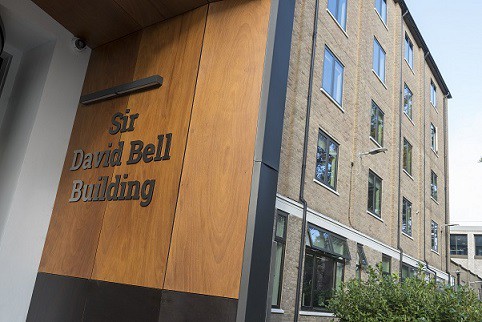
Lighting the way to a fully connected university
Paul Jones and Tom Greenrod talk about the benefits for a London university which has had a smartphone-accessible DALI control system installed.

Specialist lighting guide for FM’s
The Society of Light and Lighting (SLL) has published its first guidance document designed specifically to address the key lighting tasks required of facilities managers.
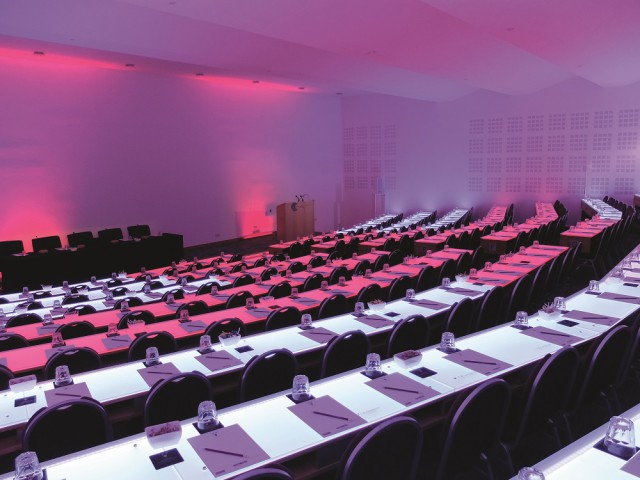
The future of buildings and cities are going to be smart and connected spaces, so what is the role of smart lighting within commercial buildings?
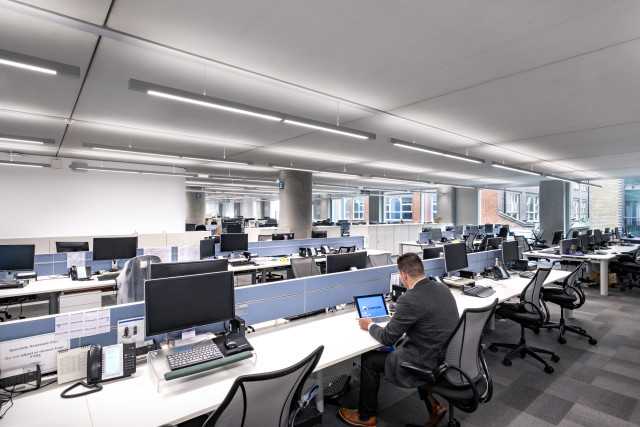
Zumtobel has supplied a lighting upgrade for Southwark Council’s office headquarters, renewing the original installation they supplied 12 years ago.
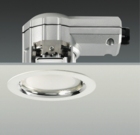
Base LED junior is a smaller version of Thorn Lighting’s replacement downlights for halogen and CFL fittings. The new downlight comes in two versions — one for high performance (650 lm/11.5 W) and one with a deeper recessed lit surface for added comfort (600 lm/11.5 W). Both use Cree’s True White technology to deliver high-quality light (3000 K) with Ra 90 stable colour rendition.
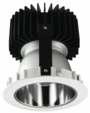
LED luminaires are designed for high spaces
Havells-Sylvania has launched a range of downlights using LEDs with very high outputs for large spaces with high ceilings such as airport terminals, museums galleries and retail outlets with high ceilings. Concord LED Performance Cones can achieve a 2000 lm package from a 50 W LED lamp — equivalent to a 100 W low-voltage capsule lamp.

Recessed luminaires combine T5 fluorescent lamps and LEDs
Recessed luminaires from Cooper Lighting & Security use T5 fluorescent lamps for the main lighting and an integral LED with purpose-designed lens for emergency lighting. Lechenti luminaires are available in fully recessed or semi-recessed formats and suitable for lay-in or draw-up installations.
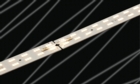
Linear LED lighting modules can replace fluorescent lighting
Tridonic has developed compact linear LED modules that can be combined in lines to create strip lighting as an energy-efficient replacement or alternative to T5 or T8 fluorescent lighting. The Stark LLE modules measure 35 x 270 mm, and up to five can be operated with a single TALEXXconverter.

Light at the end of the tunnel
The Department of Communities & Local Government (DCLG) recently published its consultation document outlining changes to the Building Regulations, which Alastair Ramsay believes provides grounds for real optimism on more effective lighting control.

Recent advancements in LED technology have meant it is rapidly coming into the mainstream. Jocelyn Mottram sheds some light on the latest developments.
Wireless dimmers provide integrated lighting control
Crestron’s wireless lighting dimmers provide native Crestron dimming control to any lighting fitting in new or retrofit 230 V installations. Reliable mesh networking enables infiNET EX wireless technology to be installed in virtually any location. Universal dimming provides automatic compatibility with forward and reverse phase load. The network is linked to a Crestron control system via Ethernet or Cresnet. The Crestron processor can talk to any device.
Newey & Eyre has introduced a high-quality high-output LED downlight kit that is compliant with Part L (parts A and B) and ideal for applications where high-quality lighting and zero maintenance are required. The Allom kit includes driver, LED module and anti-glare downlight with a lifetime of 70 000 h (at L70).
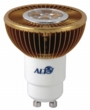
As an alternative to MR16 low-voltage halogen lamps, LED Exchange’s ALT V% LED lamp uses just 7 W to deliver 520 lm at a warm-white colour temperature of 2800 K, 85% less than the halogen equivalent. The heat sink is said to be so effective that the lamps have a life of 30 0000 — over 10 years based on an 8-hour day.

Survey shows retrofit can halve lighting costs
Research by Vita Energia suggests that energy consumption for lighting in factories and warehouses can be reduced by an average of 58% by upgrading lighting fittings with specially designed reflectors and installing lower-wattage high-efficiency lamps and ballasts. The survey involved over 500 sites with a fairly typical double-shift patter of 100 h a week (5116 h/week). A 12-month payback was achieved by facilities operating for 6936 h a year and 12 to 24 months for fewer operating hours.

Getting lighting costs under control
Peter Haseler argues that a more strategic approach to controlling lighting requirements can deliver real benefits in terms of energy cost reductions and operational effectiveness.

LEDs bring flexibility to emergency lighting design
Fast panic-free evacuation from burning buildings is crucial, which is why UK legislation demands reliable, good quality emergency lighting. Bernard Pratley explains how the latest generation of white-light LEDs provide highly effective escape-route lighting.

Ridi secures Lidl lighting contract for UK stores
The first of 50 Lidl stores in the UK to be fitted out with Ridi’s prewired lighting trunking system is at Braintree. The UK stores are part of a European-wide contract that has already seen Ridi upgrade lighting in most of Lidl’s 1500 stores in France, as well and in Switzerland, Germany and Poland.

MK adds to its Echo self-powered range
MK Electric has extended its Echo range of self-powered switches with a combination switch receiver and repeater. The K5420R is designed mainly for installing in ceiling voids for wiring into the lighting circuit. It reduces the stock required to wire an installation because when installed and powered but not programmed with transmitters it will also work as a repeater.

LED lighting shows its capabilities at ExCel
LED lighting installed in various areas of the ExCel exhibition and conference centre in London has considerably improved the quality of lighting and is achieving significant energy savings. The new lighting has been installed in the central boulevard, which is over 700 m long, the entrance canopy to the conference centre and the walkway alongside the adjoining dock.

Presence sensors respond to real room shapes
Steinel’s Control Pro system of presence detectors for controlling lighting have square-shaped detection characteristics that are said to be better suited to the layout of rooms such as offices and conference areas than the round attributes used by conventional presence detectors. According to Steinel, ‘Never before has it been possible to cover offices and commercial areas with presence detectors without overlaps or leaving gaps. Using Control Pro, zones can be planned perfectly, with reliable detection at every point of the room and up to 4800 switching zones.’

Additions to Finder’s 18 Series of PIR motion detectors can meet the needs of applications with higher ceilings, higher loads and those requiring direct interface to a PLC or BMS. There are two versions, one for flush fitting and the other for surface mounting.

Ex-Or lighting controls cut costs for London Fire Brigade
The installation of Ex-Or lighting-control modules in 55 London fire stations to date is typically reducing energy costs for lighting by about 20%. Ian Shaw, environmental and energy-efficiency office for London Fire Brigade, explains, ‘Typically, lighting accounts for around 70% of the electricity load at each fire station. The average lighting bill per station is £10 000. To date, we are achieving annual savings of £120 000. Once the entire estate has Ex-Or’s equipment installed, we will be making savings of almost £250 000 each and every year.’ [There were still 50 more stations to be completed.]

New T5 fluorescent lamp has very long life
The latest addition to Osram’s T5 range of fluorescent tubes has a life of up to 45 000 h, good for applications where replacement is difficult and costly. Lumilux T5 high-output XT tubes are available in 54 and 80 W versions and a range of colour temperatures. They are perfectly matched with Osram’s Quicktronic electronic control gear.

Osram helps the British Army to cut costs
Energy consumption for lighting has been nearly halved at the Royal Military Academy Sandhurst following the installation of Osram’s Lumilux fluorescent tubes in the east and west corridors of the Old College. Lighting levels have increased from 180 to 340 lx.

Lighting is the second biggest use of energy in London, making it a prime target for energy-efficient control. Darren Burford takes up the story.
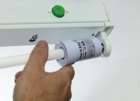
Simple lamp conversion achieves big cut in energy costs
Relamping with T5 fluorescent lamps in old fittings has reduced lighting energy costs at a garden centre in Hampshire by 44%. The use of the new lamps was made possible using the Save It Easy retrofit converter device from Energys Group. The 8 ft tubes previously used were very expensive, tended to lose output quickly and produced a rather yellow light.
Totalight offers free conversion to dimmable LED lamps
Totalight is offering dimmable LED lamps that can directly replace 50 W GU10 halogen lamps free of charge — in return for a share of the energy savings. These LED lamps use only 5.3 W and have a life of 48 000 h, so there are considerable maintenance savings in the long term. Organisations wanting to keep all the cost savings can buy TL403GU-D lamps for £12 (plus VAT). The saving on energy bills that can be expected is about 90%
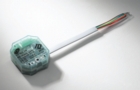
Lighting control without wires
Wireless lighting-control technology from CP Electronics enables fully featured and cost-effective lighting controls to be installed with minimum disruption. The An-10 range delivers all the control functions that would be expected of a hard-wired system — including presence/absence detection, maintained illuminance, dimming (DSI/DALI digital and 1 to 10 V analogue) and scene setting.

Rapidly evolving lighting technology means that replacing or upgrading lighting systems can be relied on to achieve significant energy savings and rapid paybacks — explains Steve Kearney.




Lighting the way
Halesowen College has set a sustainability example for higher education institutions by installing smart lighting as part of its latest environmental initiative, making up to 85% energy savings compared to the previous system.
BESA updates HIU Test Standard
The Building Engineering Services Association (BESA) has announced an important update to its UK Heat Interface Unit (HIU) Test Standard, further strengthening performance benchmarks and supporting the sector’s readiness for incoming heat network regulation.
