


National Trust exploits carbon-neutral biomass heating to cut emissions
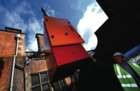
As part of its drive to reduce carbon emissions across its estate, the National Trust has replaced two oil-fired boilers at Sudbury Hall in Derbyshire with two 150 kW STU wood-pellet biomass boilers from Hoval. They were specified following a feasibility study by Lorien Engineering Solutions and visits to local Hoval installations.
Charles Robinson, the National Trust’s senior building surveyor, says, ‘The National Trust is committed to installing renewable-energy technologies in its properties wherever appropriate. The fact that we were able to source both the boilers and wood pellets locally also helped to reduce the building’s carbon footprint.’
The first stage of the project was to remove the existing oil boilers and oil tank from the cellar. Working closely with Instatherm, which also supplied the pellet feed system and underfeed stokers, Hoval took a turnkey role in managing the work, through to commissioning the new boilers.
The pellet hopper is next to the boilers and made from a special fabric on a steel frame so it could easily be assembled in the cellar. The fabric allows air to pass though while retaining dust, so the hopper does not need to be vented during filling.
The pellets are sourced through local biomass fuel specialist Strawsons Energy.