


Dimplex launches range of fan convectors for heat-pump systems
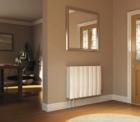
Dimplex has introduced a range of wall-mounted fan-convectors for use with its heat pumps. They are said to offer a responsive and energy-efficient alternative to underfloor heating and conventional radiators for heat-pump systems. The SmartRad range can be installed in existing buildings as a compact and energy-efficient alternative to conventional radiators and in new buildings.
These fan convectors are described as having excellent performance with water temperatures as low as 40°C, enabling the efficiency of heat pumps and condensing boilers to be maximised.
The water content of a SmartRad is less than 3% that of a conventional radiator, making them very responsive and able to warm up a room four times more quickly than a conventional radiator with comparable output. They can also respond quickly to incidental heat gains.
SmartRad is currently available in a stylish twist to the classic metal-radiator design, and elegant white or black glass finishes are to be added to the range.
Integrated electronic thermostats control fan speed and room-temperature stability. As set point is approached, fan speed is reduced to control room temperature to within 1 K and minimise wasteful temperature overshoot and drift.