


Low-cost heating for low-cost airline
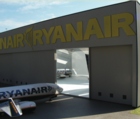
Ryanair’s new hangar at Stansted Airport can fit in five Boeing 737-800 aircraft at once and is heated by a Nor-Ray-Vac continuous radiant-tube system from AmbiRad. This project follows on from an installation at Prestwick Airport in a hangar that can house two 737s at a time.
The planes, which can seat 189 passengers, are brought into the hangar through doors that are 124 m wide for repairs and servicing. All work is carried out overnight, and the large doors remain open for long periods, so the temperature in the hangar can fall dramatically — especially in Winter. Continuous radiant-tube heating responds quickly and also promises considerable cost savings over its life.
Gary Adcock, deputy director of aircraft maintenance with Ryanair, says, ‘This is the second Nor-Ray-Vac system that AmbiRad has installed for Ryanair. The first was in our heavy-maintenance facility in Prestwick in 2003. The system there has shown very good reliability, and we were more than happy to specify it again for our new facility in Stansted.’
The Stansted hangar measures 124 x 58 m and has 16 burners suspended at 19 m in the 23 m-high tail plane section. The body section of the hand is 14 m high and has 12 burners in four zones at 11 m height.
The heating can be zoned according to the number of aircraft being worked on, reducing energy requirements.